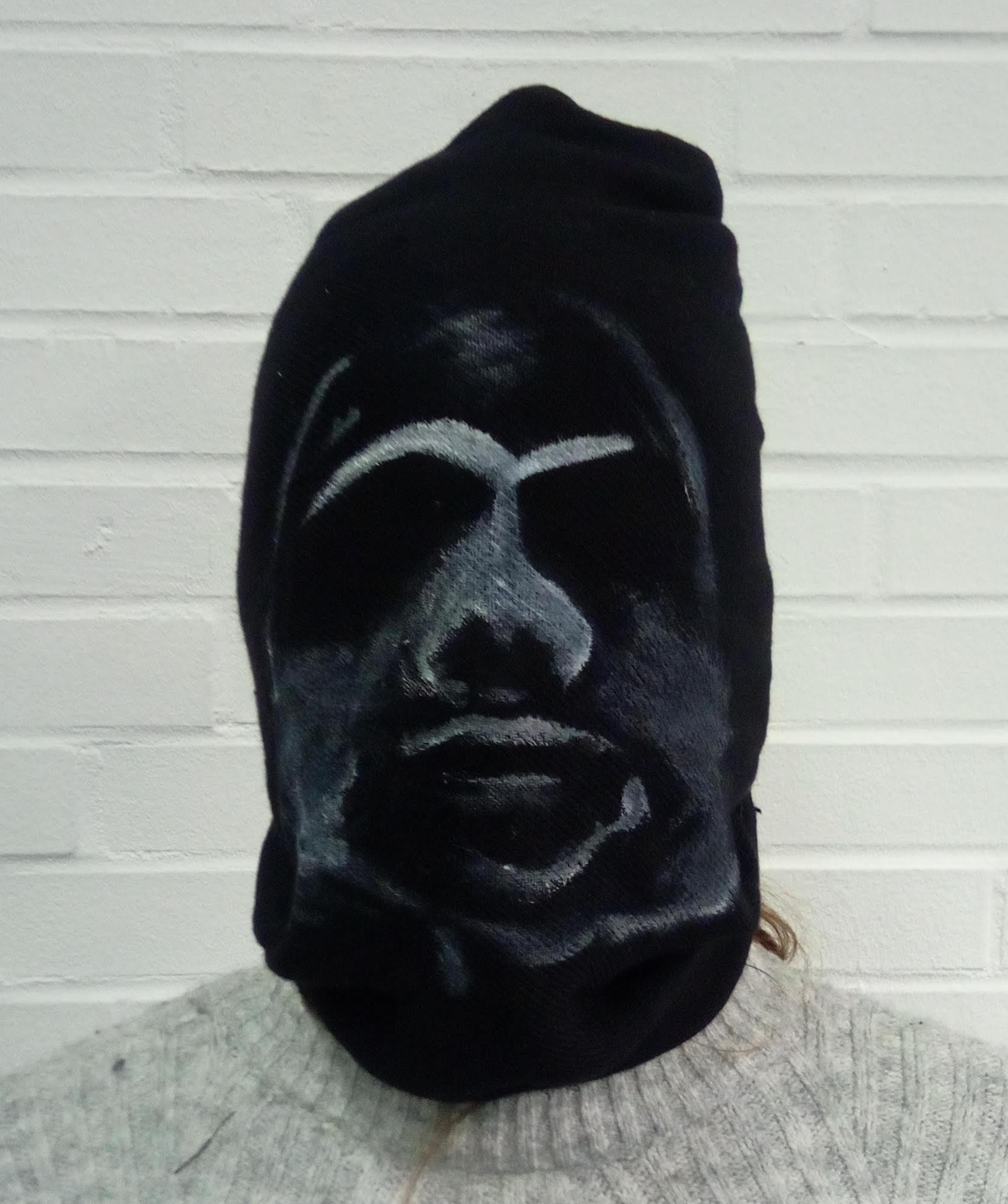
Inner pressure/Own pressure
a performative experiment
“An inner pressure is understood to be the inherent pressure that a substance or a system exerts on its environment and thus strives for an expansion of itself.” (from: P. Himmel: Bautechnische Physik)
Four performers dare to experiment together: What happens to the unspeakable inside us? How does our body react to what is not spoken and how can we make the experience of the unspeakable tangible?
Based on these questions and the unspeakable as a feeling of self-pressure, the performers go on a search for what they cannot, may not or do not want to say. With the help of self-made masks, they expose themselves to different facets of the unspeakable – a metaphysical experience and the psychological shadow – and explore the impulses from their inner world. In the encounter, they become each other’s projection surfaces and an intimate space emerges that makes the collective experience of the unspeakable something that can be experienced anew each time.
Performance: Miriam Bach, Carlotta Bauer, Maxie Le Dévéhat, Surya Tüchler
Artistic direction: Maciek Marzec
Dramaturgy: Amelie Werner
Probenfreundinnen: Sarah Heinzel, Pia Kehl
09.10.21, 19 Uhr, 10.10.21, 19 Uhr
Small Stage, HfMT Campus Barmbek
_________________________________________________________________________
Interview with Maciek Martios
led by Amelie Werner
- How do you observe the unspeakable as a phenomenon in our society?
I believe this phenomenon can be seen on quite a few levels. For me, the most exciting thing is when the reason why something is unspeakable is that it is unimaginable in the sense of “you can’t grasp it with words”. I find it so exciting because our language is lacking and our possibilities as a human being to think and understand are limited, which is exactly where interesting tensions arise.
- So the performance is not abut uttering the unspeakable. How can viewers participate in it?
Language is not the only channel through which communication takes place. 90% of communication takes place via non-verbal signs. But I see the piece as an experiment and the idea is that something happens on stage during the performance in the performers, they experience something, really live at the moment. It’s about creating that experience in them. This then conveys it to the audience in the sense that the audience is witnessing what is happening. A witness is never neutral, being a witness means being part of the situation.
- The perfromers wear theatrical masks on stage. How did you work with them?
The masks are charged with meaning. The performers created the masks themselves, relating to the content, to the feelings or memories that correspond to the different themes. When wearing such a mask, they can better connect with what the mask represents, because the making of the mask was performed as a ritual. It’s like a tool to get somewhere.
- What is the relationship between planning and improvisation on stage?
The working method is pretty much based on improvisation. This has to do with the central goal that the performers experience something on stage. For this to happen, the experience has to be real. The effect of this is relatively comparable from performance to performance, in that the improvisational tasks are made clear and also in that the performance have a common direction in mind.
5 Your way of working is inspired by the Polish director Jerzy Grotowski. Does that also apply to this project?
A certain way of thinking and understanding of theater connects me to Grotowski. The idea that theater is a laboratory and that the self-exploration of theater work is the most exciting. Also that theater is an extension of ritual. Theater as a practice that is or can be spiritual. With these means you can explore yourself, the world around you, you can access the deepest and most primal human by doing theatre, i.e. performing arts. That’s what interests me about theatre.